Scroll through the scenes or use the chapter links. The sources and version notes follow the story.
When the story or a chapter is focused, use arrow keys to change scenes, Home for the beginning, and End for the ending.
01
The empty place
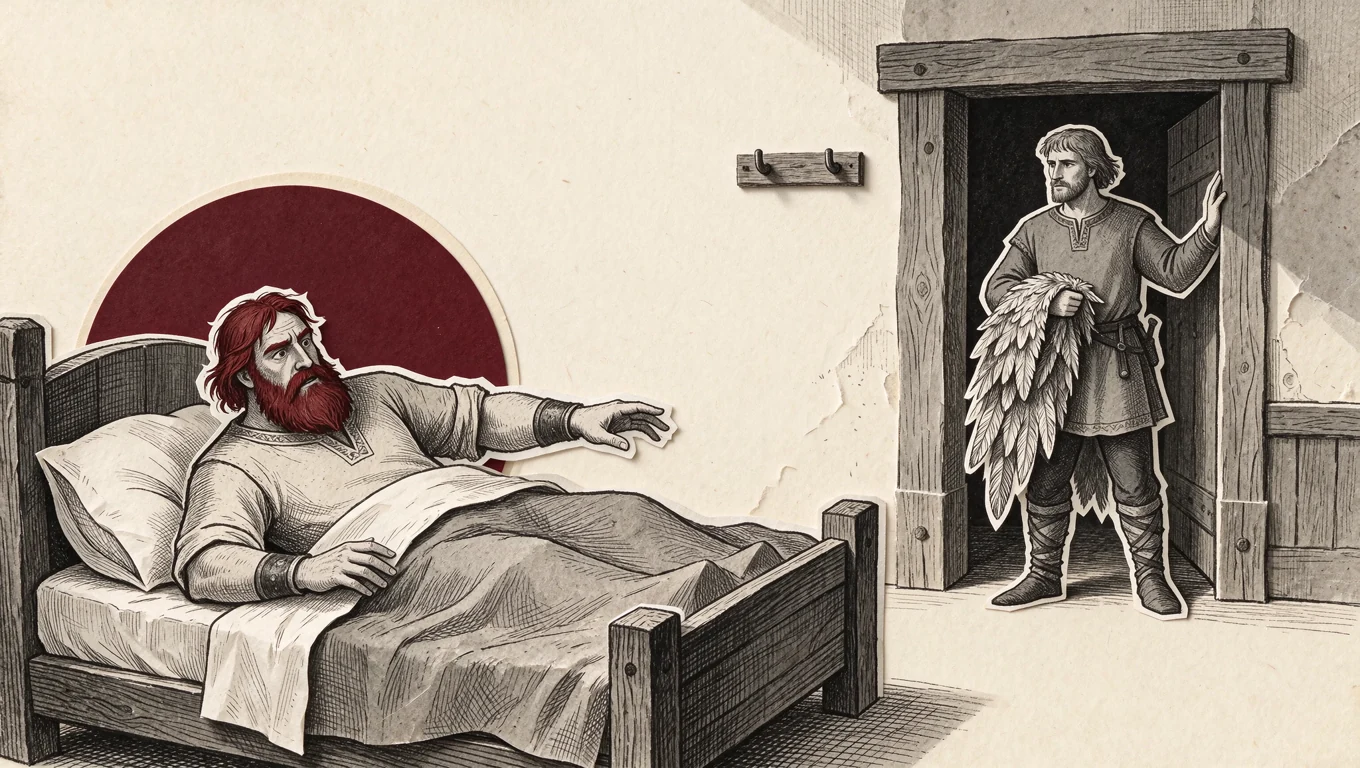
Thor woke and reached for Mjölnir. His hammer was gone. In the poem Þrymskviða, the discovery sends him into immediate agitation: he feels for the missing weapon and asks Loki to help uncover what has happened. Strength is his familiar answer to danger, but strength cannot retrieve a thing whose hiding place is unknown. Before any blow can be struck, someone must learn where the hammer has gone and what its thief intends. For once, Thor’s first task is to ask a question rather than to raise his arm.
The search required a journey to the giants’ land. Loki asked Freyja for her feather garment, and she lent it. Wearing it, he could travel where the investigation needed to go. The poem moves quickly: a request, a departure, a meeting. Thor remains without his principal weapon while another god carries the problem outward. The borrowing is worth noticing. The eventual recovery depends on more than Thor’s own possessions or abilities; it begins with someone else’s help and a form of movement that is not his usual way through the world.
Loki found Þrymr, who admitted hiding the hammer deep beneath the earth. He would return it only if Freyja came to be his bride. The demand treated a goddess as the price of a stolen object. Loki returned with the news, but Freyja refused the proposed exchange with anger. Her refusal is part of the poem, not an inconvenience to be silently removed from a cheerful wedding adventure. The gods had learned the thief’s terms. They had not acquired a right to make someone else accept them.
In Þrymskviða, Freyja refuses the proposed marriage. The disguise is not her agreement to the bargain, and it is not a detail that can be removed without changing the plot. The apparent bride at the feast is someone else.
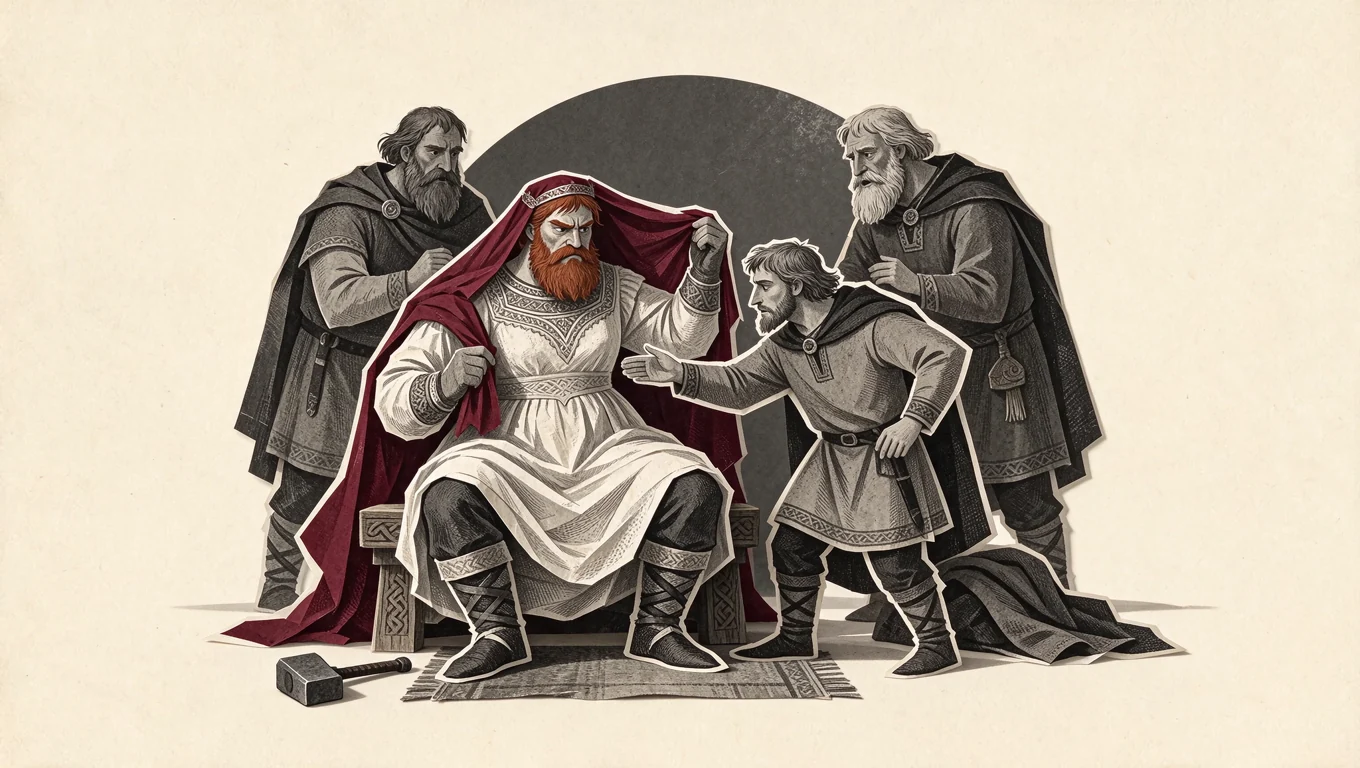
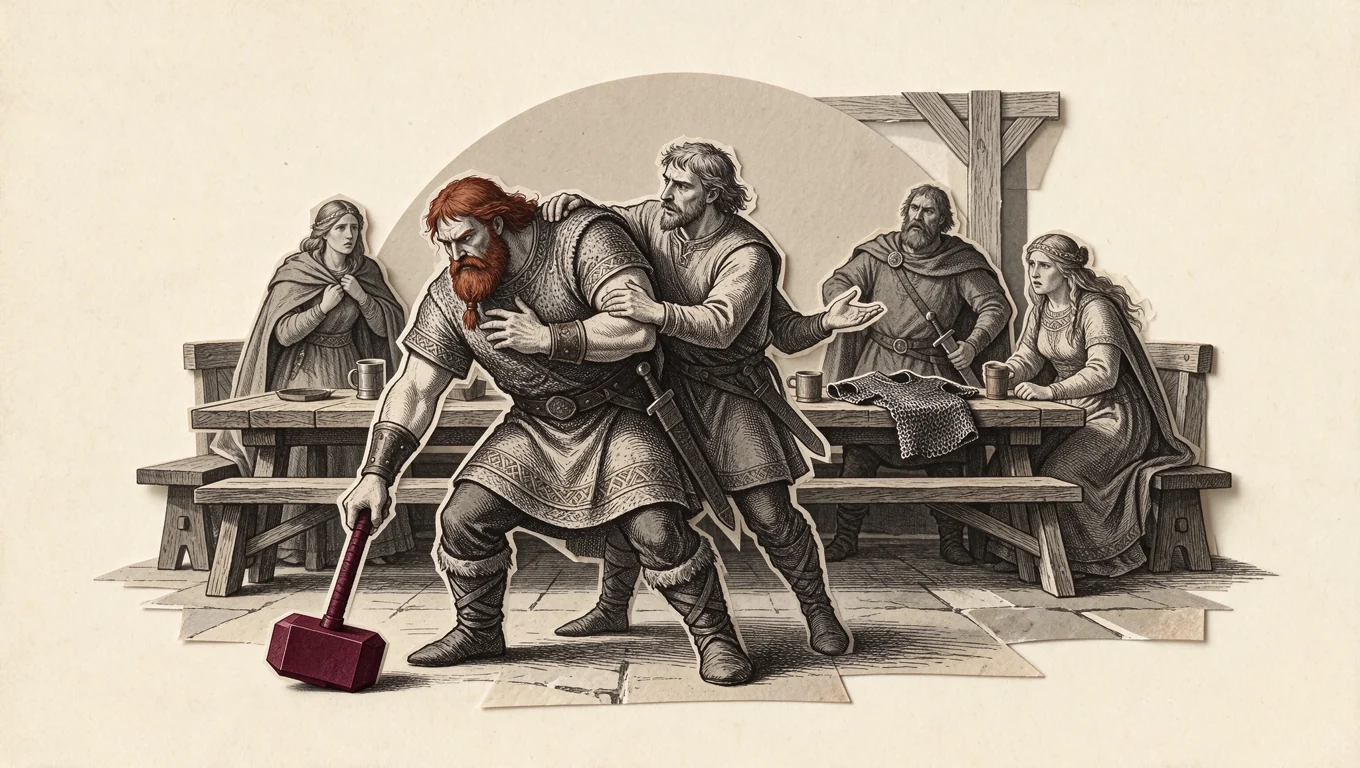
The gods gathered to consider what to do. Heimdall proposed an unexpected answer: dress Thor as the bride Þrymr was expecting. A veil, a dress and Freyja’s necklace would disguise the visitor, and the hammer might be brought close enough to recover. Thor objected, anxious about the shame he thought the disguise would bring. Loki answered with the practical danger of leaving the hammer in the giants’ possession. The problem demanded that Thor endure being mistaken for someone else before he could act recognisably as himself.
Thor accepted the bridal clothing, and Loki went with him in the role of an attendant. The poem enjoys the mismatch between the disguise and the person inside it. Clothes and ceremonial expectations carry the deception farther than an openly armed arrival could have done. This retelling keeps that comedy directed at the situation and Þrymr’s assumption, rather than suggesting that women’s clothing is itself a fault. The travellers set off together. One had to remain concealed; the other had to be ready with an explanation whenever the concealment came close to failing.
Þrymr ordered the hall made ready. He believed that Freyja was coming, and he imagined the wealth and honour of the marriage about to take place. The audience knows more than the host. Beneath the veil sits Thor, waiting for the stolen hammer to enter the room. That difference turns the feast into a scene of suspense as well as comedy. Every ceremony that brings the wedding nearer also brings the thief nearer to placing Mjölnir back within its owner’s reach. The disguise must survive only long enough for that to happen.
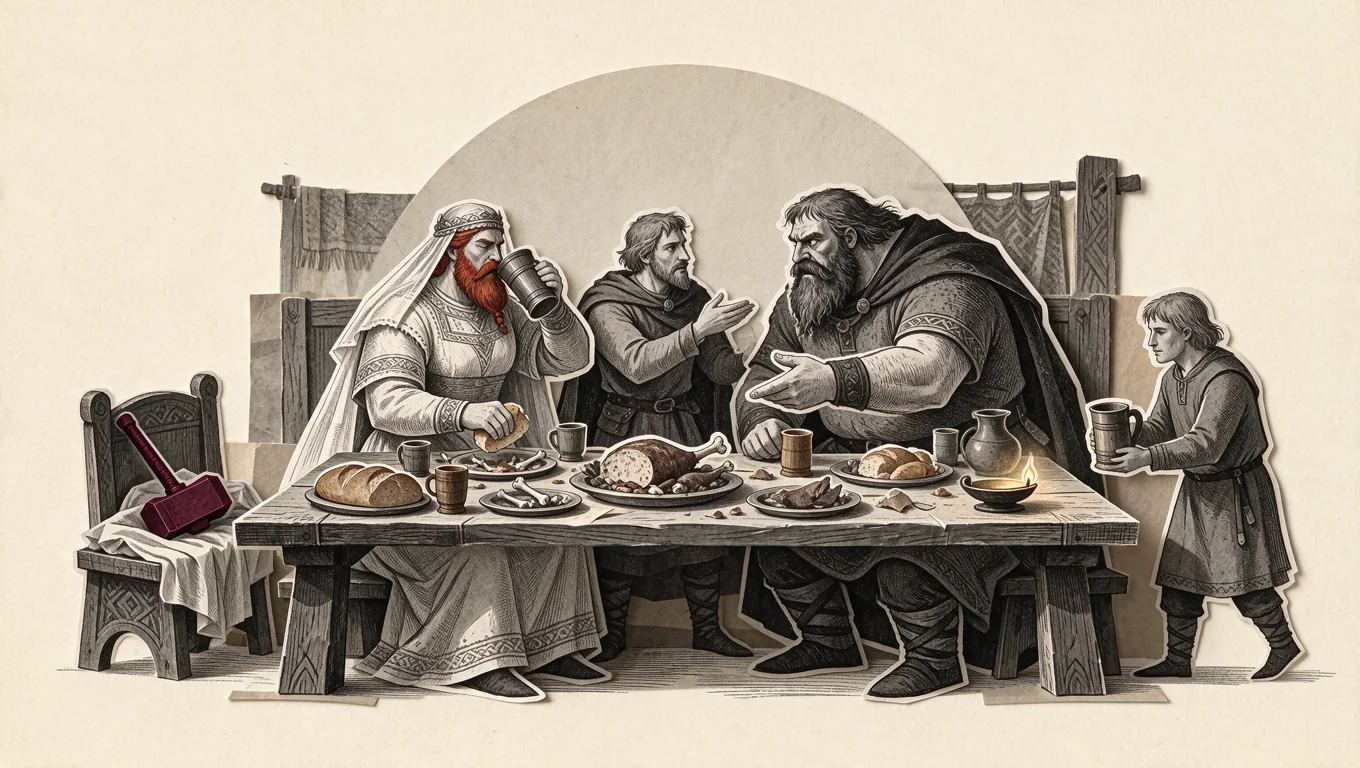
Thor ate an ox, eight salmon and the delicacies set out for the women, and drank an extraordinary quantity of mead. Þrymr noticed. This did not resemble the bride he had expected. Loki supplied an explanation: the bride had been too eager for this marriage to eat for eight nights. The answer converted evidence against the disguise into a compliment to the host. Thor’s appetite did not become smaller; the story around it became more convenient. The poem gives Loki’s quick invention as important a part in the recovery as the strength waiting under the veil.
A hammer-shaped pendant can be material evidence for an emblem and its use. It cannot independently verify the theft, disguise or feast in a poem. Comparing an object with a telling is useful precisely because their kinds of evidence differ.
Þrymr lifted the veil for a kiss and recoiled from the fierce eyes beneath it. Again Loki answered before the danger could settle into recognition. The bride, he explained, had been unable to sleep for eight nights from longing to reach the giants’ land. The repeated excuse follows the same pattern as before: an alarming fact is recast as devotion. Thor does not need to become a convincing bride in every respect. He needs Þrymr to keep accepting a story that fits what Þrymr already wishes to believe.
At last Þrymr ordered Mjölnir brought in to hallow the bride. It was to be placed on her knees as part of the ceremony. The demand that had kept Thor from the weapon had become the means of returning it to him. Once the hammer lay within his grasp, the disguise no longer protected the host. The poem’s mood turns suddenly: the farce ends in Thor’s violent attack upon Þrymr and the giants. Here that ending is stated without graphic detail. The stolen weapon has returned, but the recovery is not a peaceful wedding resolution.
Thor went away with his hammer. Looking back through the poem, the return required Freyja’s lending and refusal, Heimdall’s plan, Loki’s travelling and explanations, and Thor’s willingness to enter a situation in which force could not immediately help him. The delight of the adventure lies in that temporary change of roles. The hammer remains the unmistakable object at its centre, but most of the work of retrieving it happens before it is lifted. The tale lets its strongest figure become dependent on costume, timing, help and a very persuasive companion.
The story follows the Old Norse poem Þrymskviða in the Poetic Edda. The feast’s violent conclusion is summarized without graphic detail.
The poem behind the disguise
This telling follows Þrymskviða in the Poetic Edda, stanzas 1–32, rather than treating the episode as an event recorded by contemporary witnesses. Translations spell the names differently: Þrymr also appears as Thrym, and Mjölnir as Mjollnir. The poem’s humour and its abrupt violent ending both belong to the source.
The British Museum’s hammer pendant is material evidence of a hammer-shaped object and its cultural setting. It is not proof that this theft or wedding took place. Reading the object beside the poem can help distinguish an emblem used by people from the dramatic deeds of the god associated with it. The optional artifact details in this story concern the illustrated telling, not an ancient object offered for inspection here.
Traveller, attendant and quick maker of explanations.
Freyja
The goddess who lends her feather garment and refuses Þrymr’s demand.
Þrymr
The giant who hides Mjölnir and demands a marriage.
Heimdall
The god who proposes the disguise.
Reading beside this telling
Related reading for this story and its named tradition. Modern retellings and other translations are distinguished from the exact sources used above.
The Norse Myths — Kevin Crossley-Holland
For the Norse tradition: Kevin Crossley-Holland’s modern retellings. Follow this page’s Edda links for the named source; this collection is not an edition of those same translations.
Optional purchases. Use what you already have. As an Amazon Associate I earn from qualifying purchases. Check the exact edition or model before buying.