Scroll through the scenes or use the chapter links. The sources and version notes follow the story.
When the story or a chapter is focused, use arrow keys to change scenes, Home for the beginning, and End for the ending.
01
A family and a broken succession
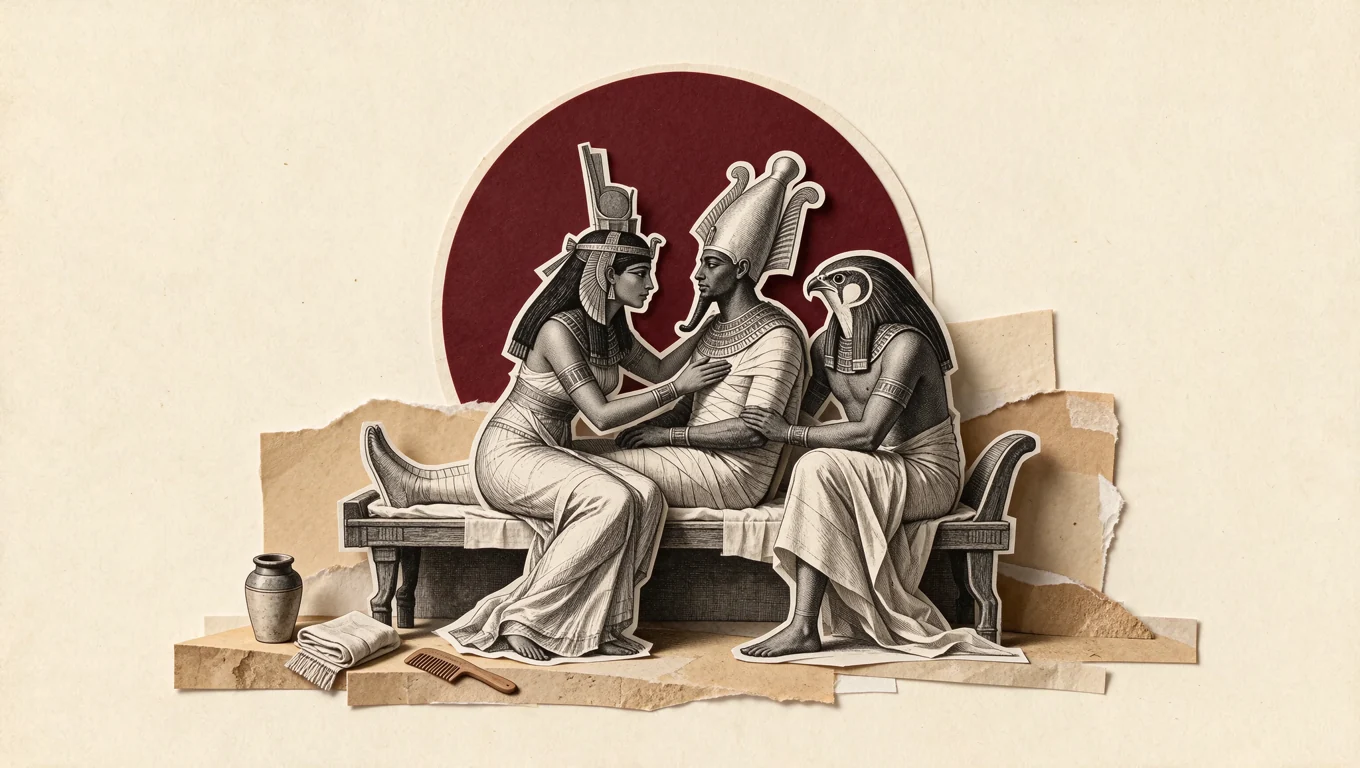
Osiris, Isis, Seth and Horus belong to stories told in Egypt across many centuries, not to a single surviving novel with one authorised sequence. This telling begins with the family conflict described in the museum sources: Osiris rules, and his brother Seth kills him. Isis is both Osiris’s sister and his partner. The death threatens a relationship and an inheritance together. To understand what follows, keep both in view. Isis’s search concerns someone she loves, while the future of their child will become inseparable from the question of who may succeed the dead ruler.
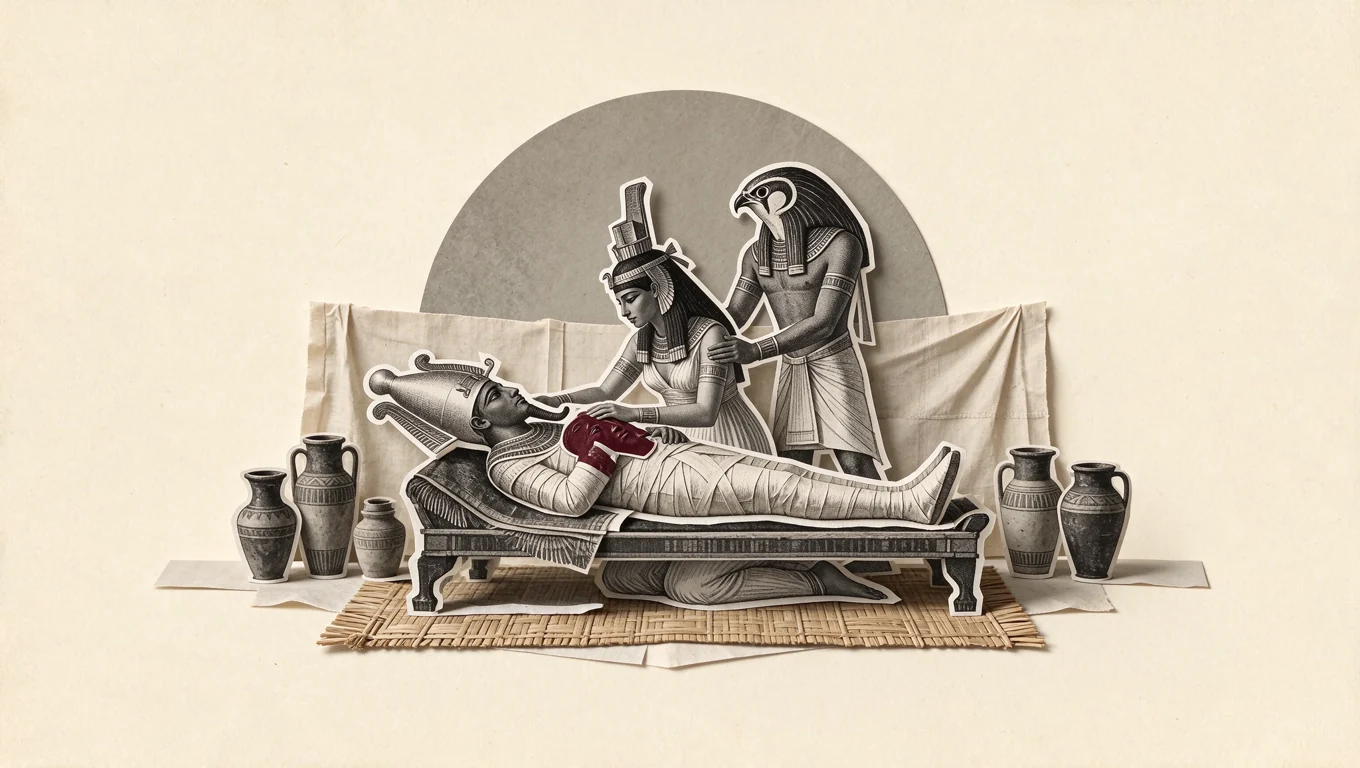
Isis sought Osiris and used her divine power to restore him. Different Egyptian texts and later accounts tell the search, the condition of his body and the assistance she receives in different ways. We do not add a numbered set of scattered pieces or a journey through particular foreign cities to make those accounts appear identical. The thread kept here is her determined work of recovery. The death that seemed to end the family’s future does not remain beyond response. Her power makes the conception of their son Horus possible after the loss of his father.
A statuette of Isis nursing Horus can be read as an object made for a purpose, not as a frame from a continuous comic strip. The Met’s record gives its own context. The story and the surviving object illuminate one another without becoming the same kind of evidence.
The restoration does not mean that Osiris simply resumes an ordinary life on earth and the household begins again unchanged. In Egyptian funerary traditions he belongs to the realm of the dead, while Horus will act as his living heir. The two figures can therefore carry related but different forms of continuity. Isis stands between the loss and the possibility of a successor. A reader who expects the recovery of Osiris to end the story may miss its next movement: the great work of protecting a future that has only just become possible.
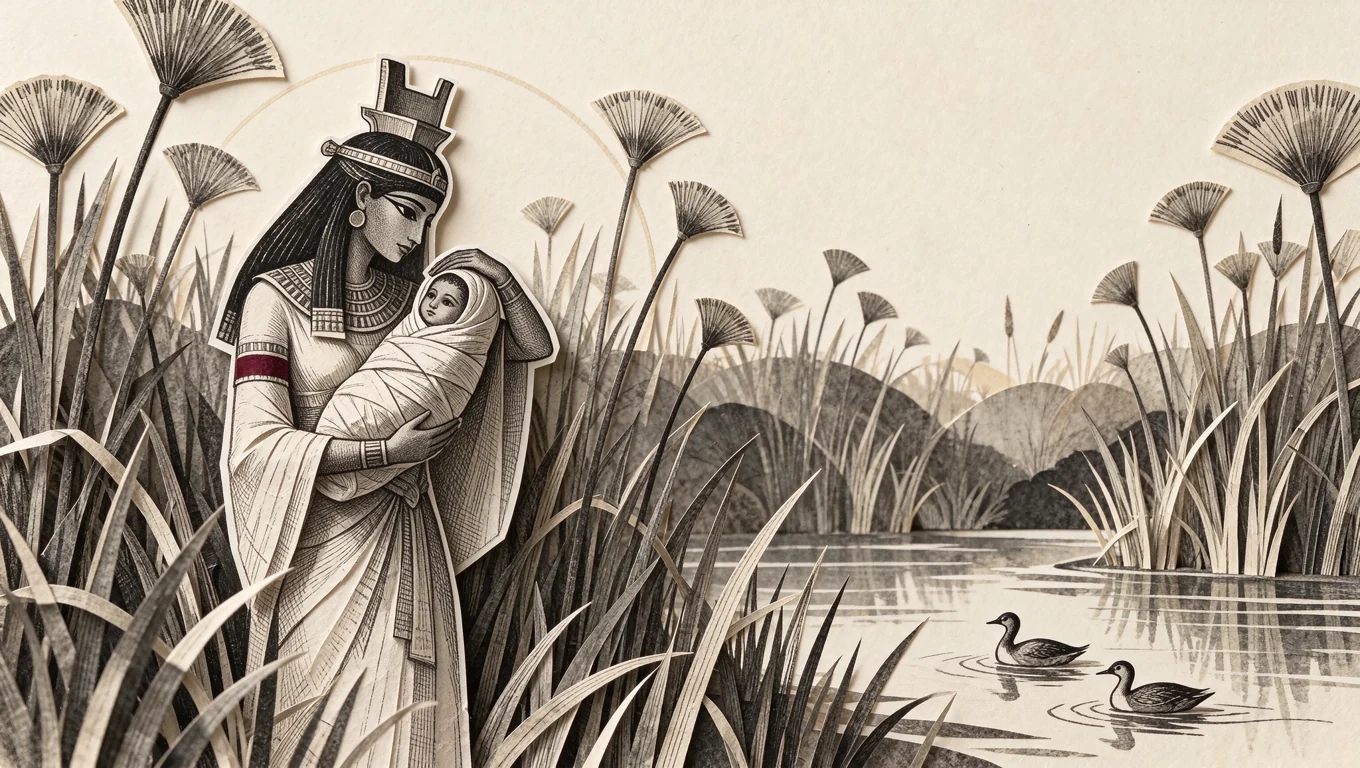
Horus was born into danger. Isis hid and nourished him among the papyrus marshes, beyond the reach of Seth, who threatened the child because he was Osiris’s heir. The shelter is a different kind of power from a throne. Reeds conceal; a mother feeds and tends; a small body must live long enough to grow. Egyptian objects repeatedly show Isis with the infant, and one fragment in the Met specifically places the nursing pair in the marshes. Here the reeds in the illustration mark that protected space, not a precisely reconstructed location or a photograph of an ancient event.
Concealment did not remove every danger. A group of protective and healing texts tells how the young Horus suffered a poisonous sting or bite. Isis found herself confronting the possible death of the child whose survival mattered so much. In the episode associated with the Metternich Stela, the mother’s cry summons help, and Thoth becomes the healer. We bring that related tradition into the telling here, identifying the join rather than pretending it is the next chapter of one continuous manuscript. The threatened child makes the stakes of divine protection immediate and bodily.
Thoth came with words of power, and Horus was restored. The older translation and commentary connects the child’s rescue with the movement of the solar boat: the cosmic journey and the urgent life in Isis’s arms are not treated as unrelated matters. The spells were valued as protection against danger, and their inscription on objects allowed the myth to be invoked for human needs. This is an account of ancient religious practice, not a claim that such words are a medical remedy today. Within the story, help reaches the mother and her child lives.
The Osiris cycle, the marsh image and the protective spells have different histories. The version note calls this telling a synthesis for that reason. Follow a particular object or text when checking a particular scene, rather than treating the whole sequence as one ancient document.
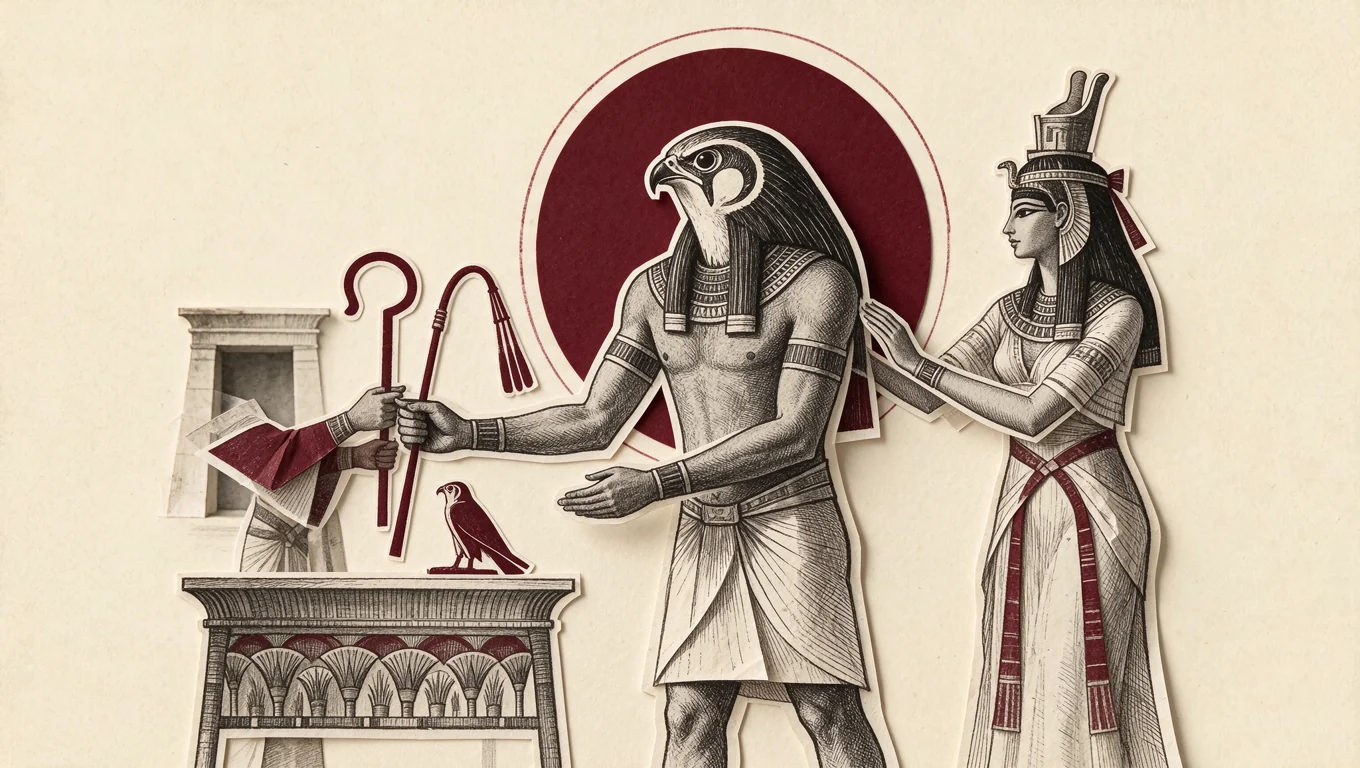
Horus survived childhood and grew into the figure able to assert his inheritance. Isis’s care had preserved more than a name: the son could now take a place in the struggle over his father’s authority. Egyptian accounts of the contest between Horus and Seth contain many episodes and competing arrangements. This short synthesis does not make all of those contests happen in one invented order. It keeps the broad outcome described by the museum account: Horus overcomes the dangers before him and claims his right as heir. The child once hidden in the reeds can stand openly.
The story’s final view brings Isis and Horus together without erasing Osiris’s death. Father, mother and son occupy different places in a continuing divine order. The image of the nursing goddess, so quiet beside scenes of rivalry, is part of that order too. It gives protection the shape of an intimate act. In a small object, a person could encounter a story of survival and hope for life and health. We end with that scale in mind: the great question of succession once depended upon a vulnerable child, and upon someone who would not stop caring for him.
This is an explicitly identified synthesis of Egyptian traditions: the Osiris cycle, Isis and Horus in the marshes, and the healing of the poisoned Horus. Museum object records and protective texts support those separate strands. No single ancient text or universal Egyptian canon is claimed.
Why this is a synthesis
The Osiris cycle, the marsh imagery and the healing of the poisoned Horus have different textual and material histories. Their presence together on this page does not imply that every Egyptian period or place told one complete account. The childhood rescue is identified through the Metternich Stela and related protective texts. The detailed adult contests of Horus and Seth are not retold here.
The nursing statuette and the marsh fragment are surviving objects, with their own dates and histories. They can show what an image meant and how people used divine stories; they do not document the myth as a historical event. A modern reader may notice that authority is preserved through feeding, concealment and patient protection as well as through confrontation. That is an interpretive emphasis of this adaptation. Its paper illustrations are separate from the ancient objects linked below.
Goddess, partner of Osiris and protector of the young Horus.
Osiris
The slain ruler who belongs to the realm of the dead.
Horus
The threatened child who grows to claim his inheritance.
Seth
Osiris’s brother and rival to his heir.
Thoth
The divine healer in the childhood rescue tradition.
Reading beside this telling
Related reading for this story and its named tradition. Modern retellings and other translations are distinguished from the exact sources used above.
Egyptian Myths — Jean Menzies
For the Egyptian tradition behind this story: a modern illustrated collection. Keep the museum evidence and this later retelling distinct; this is not an ancient primary source.
For another modern approach to retelling Egyptian stories. Compare version choices rather than assuming it reproduces the exact source used on this page.
Optional purchases. Use what you already have. As an Amazon Associate I earn from qualifying purchases. Check the exact edition or model before buying.