Scroll through the scenes or use the chapter links. The sources and version notes follow the story.
When the story or a chapter is focused, use arrow keys to change scenes, Home for the beginning, and End for the ending.
01
Dreams of danger
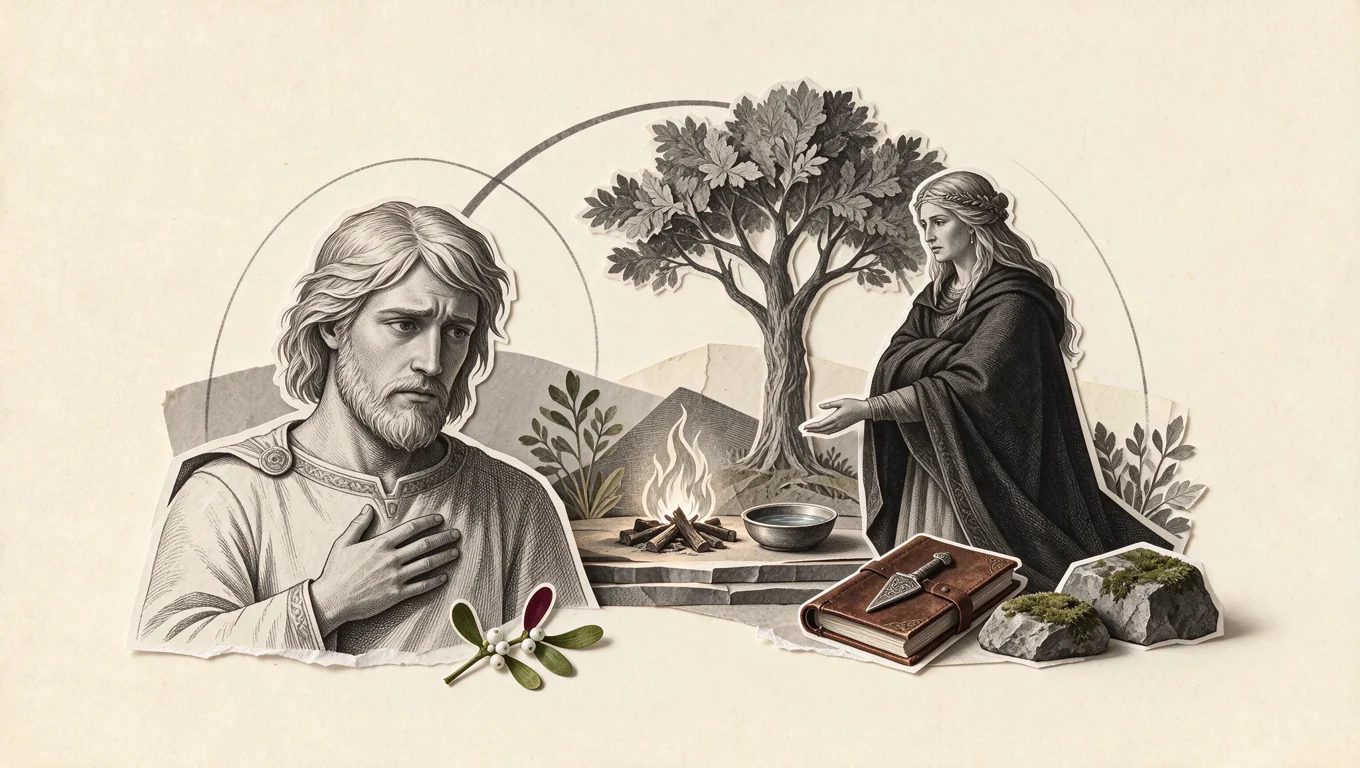
Baldr began to have dreams that threatened his life. In Snorri’s Gylfaginning the gods took the danger seriously and considered how to make him safe. His mother Frigg sought promises from the things of the world: fire and water, metals and stones, trees and animals, sickness and poison. One by one, possible sources of harm were bound by an undertaking not to injure him. The attempt is vast and intimate at once. A mother tries to turn the whole material world into a shelter for one beloved son.
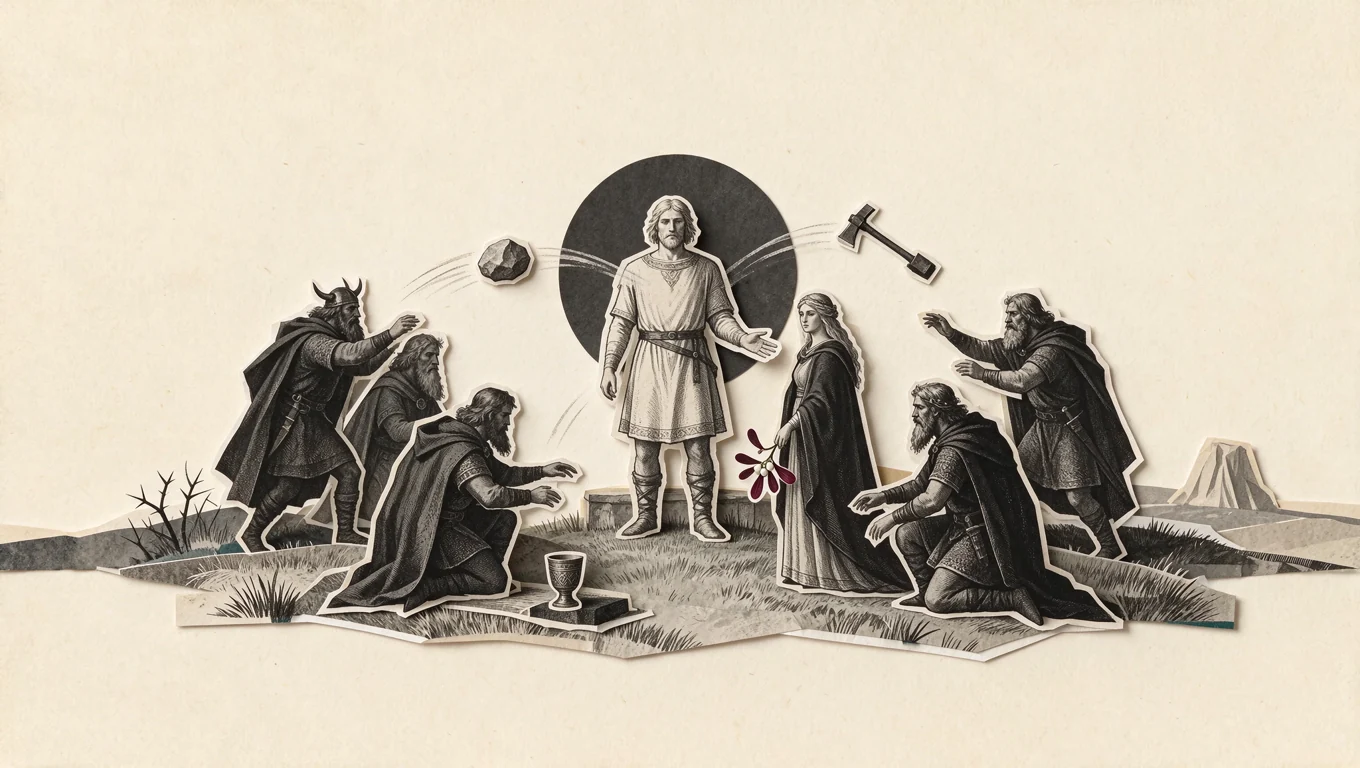
Once those promises were known, the gods felt they had achieved something extraordinary. Baldr could stand among them while objects were thrown or blows directed at him, and remain unhurt. A fear had become a demonstration. The security seemed so complete that they made a game of testing it. The scene is strange because its apparent joy depends upon repeated acts that would otherwise be dangerous. Each harmless impact seems to confirm Frigg’s work, while also encouraging everyone to forget that a plan can be immense without being complete.
Loki was displeased to see Baldr unharmed. He visited Frigg in the appearance of a woman and asked about the protection. Frigg described the promises she had obtained, then revealed an exception: mistletoe had seemed too young and small to require an oath. That judgement is the opening Loki wanted. A thing overlooked because it appeared harmless could do what the impressive weapons could not. He went to find it. The story’s danger does not arrive from a greater force outside the circle, but from knowledge of the one promise that was never asked.
First the dangers must promise not to harm Baldr; later the world must weep for him. Both plans depend on completeness. The missing promise and the missing tears rhyme structurally, even though they occur at very different moments of grief.
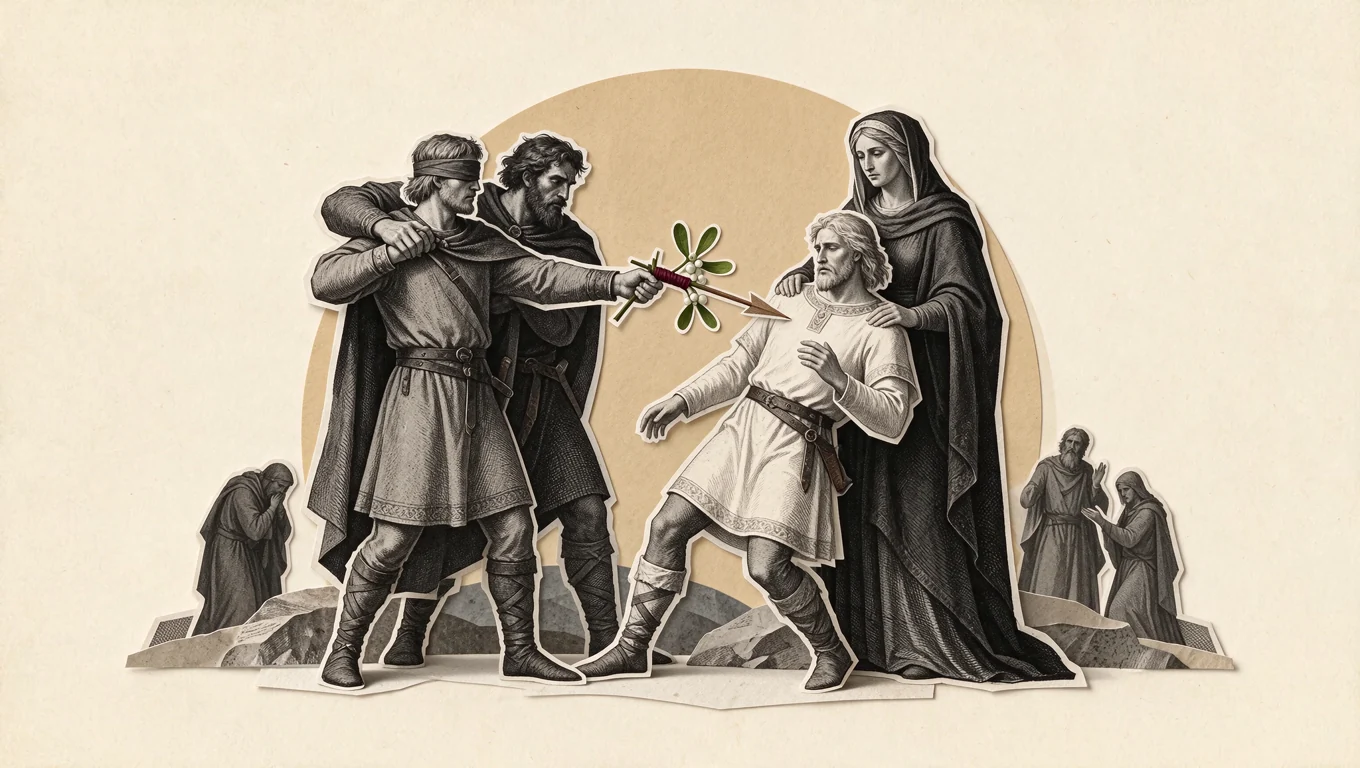
Baldr’s brother Höðr was standing apart because he was blind and had no weapon. Loki offered to help him take part. He supplied the mistletoe and said he would guide the shot. To Höðr, the proposal could resemble an invitation into the shared honour being shown to Baldr. To the reader, who has heard Frigg’s disclosure, the same help is a betrayal. The difference between those two understandings carries the next moment. Loki directs the act while another person’s hand performs it, turning participation in the game into the means of breaking it.
The mistletoe struck Baldr, and he died. Snorri first describes the gods’ inability to act or speak, then their weeping. The contrast with the earlier game is complete. What looked like proof that no harm could reach him has become the setting of the loss. Frigg’s promises have not been meaningless, but their number cannot make up for the exception. This family telling states the death without describing the wound. The grief that follows is not confined to one household; the whole company has lost someone whose safety it had begun to take for granted.
Frigg asked who would ride to Hel and seek Baldr’s return. Hermóðr undertook the journey on Odin’s horse Sleipnir. While the gods made funeral preparations, the messenger travelled through dark valleys. The wish to recover Baldr now needed a passage into another realm rather than another promise gathered among the living. Snorri tells both the funeral and the embassy; here the narration follows the rider. The choice keeps the story’s effort toward return in view without pretending the source contains no further deaths or disturbing acts in its account of mourning.
Hermóðr rode for nine nights before reaching the river Gjöll and its bridge. The guardian noticed that he did not have the appearance of the dead and asked why he was travelling that road. He explained his errand and continued toward Hel’s gate. Sleipnir carried him over it. Inside the hall he found Baldr, and stayed overnight. For a little while the messenger could see the person the gods were mourning. Finding him was not the same as being permitted to bring him home.
Hel set a condition. If everything in the world, living and lifeless, wept for Baldr, he could return; if anything refused, he would remain. Hermóðr carried the answer back. Messengers went through the world asking for tears, and people, earth, stones, trees and metals joined the mourning. The task echoes Frigg’s earlier journey among the things that might harm her son. Once again the hope depends upon including everything. This time the required promise is an expression of grief, and a single refusal will be enough to prevent the return.
In the marginForeknowledge is a different episode+
Baldr’s Dreams is not a duplicate transcript of the complete account in Gylfaginning. A poem about knowledge before the death and a prose telling of its aftermath can be compared without making their words and purposes interchangeable.
The messengers came to a figure who called herself Þökk. She refused to weep and said that Hel should keep what she held. Snorri reports that people thought this was Loki in disguise; the telling should keep that attribution rather than turn a reported suspicion into an independently witnessed fact. The refusal ended the attempt. Baldr remained below. All the tears elsewhere could not satisfy a condition that required every participant. The second effort to make a complete circle had encountered another opening that one hostile will could use.
Gylfaginning does not leave Baldr absent forever. Beyond Ragnarök, its account imagines a renewed world in which Baldr and Höðr return. That future does not cancel the sorrow of this episode or make the failed embassy a disguised success. It places a different horizon beyond it. For now, Frigg has lost her son, Hermóðr has returned without him, and the gods have learned that a vast agreement can still be vulnerable. The story holds both that immediate grief and the later possibility of a world changed enough to receive him again.
This version follows Snorri Sturluson’s Gylfaginning in the Prose Edda. Other medieval sources tell Baldr’s story differently.
A particular medieval account
The narrative follows Snorri’s Gylfaginning, chiefly chapter 49, with the renewed world in chapter 53. The poem Baldr’s Dreams is a separate source about foreknowledge of his death, not a duplicate transcript of this entire sequence. Other medieval accounts differ in participants and causes. The source’s funeral violence is shortened here rather than denied.
The protection and the attempted return have parallel shapes: first every possible danger must promise, then every living and lifeless thing must weep. One exception defeats each plan. That pattern can support a reading about the limits of control, but the story need not become a lesson that Frigg should simply have been more careful. Loki deliberately exploits the gaps. The responsibility of the betrayer remains visible beside the pain of the mother.
The beloved god whose dangerous dreams prompt Frigg’s search.
Frigg
His mother, seeking first protection and then his return.
Loki
The figure who discovers and exploits the missing oath.
Höðr
Baldr’s blind brother, guided by Loki.
Hermóðr
The messenger who rides to Hel.
Hel
The ruler who sets the condition for return.
Reading beside this telling
Related reading for this story and its named tradition. Modern retellings and other translations are distinguished from the exact sources used above.
The Norse Myths — Kevin Crossley-Holland
For the Norse tradition: Kevin Crossley-Holland’s modern retellings. Follow this page’s Edda links for the named source; this collection is not an edition of those same translations.
Optional purchases. Use what you already have. As an Amazon Associate I earn from qualifying purchases. Check the exact edition or model before buying.